
Chimney Flashing Repair in the USA
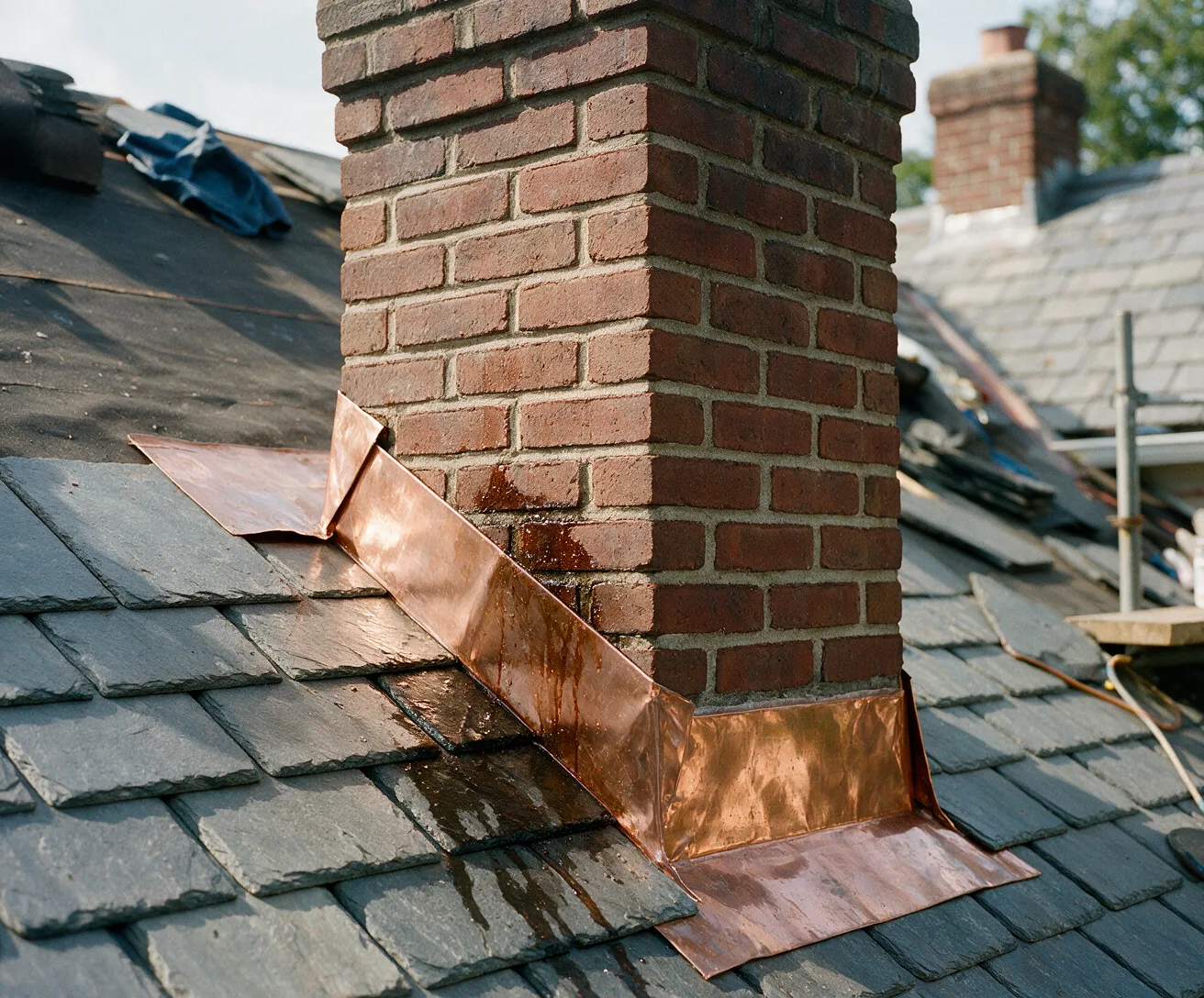
Wynnewood Roof Repair sends technicians to examine chimney flashing on older row and twin homes where plaster ceilings often sit directly below. We check how step flashing meets the masonry, whether counter flashing is properly inserted into reglets, and how the roof slope meets the chimney sides. Copper, lead, or galvanized pieces are measured for thickness and corrosion before any work begins.
Technicians also note whether a cricket has been installed on the uphill side and whether original slate or asphalt courses have been cut correctly around the stack. Movement from seasonal expansion can open joints that once shed water cleanly. Our crews document these conditions with photos and measurements before deciding on repair or full reflash. Wynnewood Roof Repair examines mortar joints around chimneys before starting any chimney flashing repair on older properties nationwide.
Visible Indicators of Failing Chimney Flashing
- Dark streaks on plaster ceilings below the chimney stack
- Soft or discolored insulation visible from the attic access
- Rust streaks or missing pieces of metal along the masonry line
- Gaps where flashing has pulled away from the brick or stone
- Damp mortar joints on the chimney interior after rain
Common Causes of Chimney Flashing Failure
Older chimneys often rely on thin copper or lead step flashing that has been soldered or folded into the roof plane. Repeated freeze-thaw cycles and thermal movement between brick and wood framing gradually fatigue these metals. When the flashing cracks or the reglet mortar erodes, water follows the step laps and enters the attic space.
Improper original installation also contributes. If the flashing was not stepped correctly or if counter flashing was surface-mounted rather than set into the masonry, water finds a path behind the metal. Technicians measure the depth of the reglet cut and check whether flashing extends at least four inches under the roof covering on each course.
Inspection Points Our Technicians Measure
On site, our technicians lift individual shingles or slate pieces to view the full length of step flashing. They record the gauge of copper where present, the overlap at each step, and the condition of any sealant at the counter flashing joint. The cricket angle is checked with a level to confirm it still sheds water away from the stack.
Masonry is probed for loose or missing mortar in the reglet line. Where plaster ceilings are accessible from below, moisture meters are used to map the extent of any staining. All findings are recorded so the homeowner understands exactly which pieces must be replaced and which can be salvaged.
Repair and Replacement Options
When only a few steps have failed, technicians can cut out the damaged copper or galvanized sections and solder in new material that matches the existing gauge. The new pieces are woven into the roof courses and set into fresh mortar in the reglet. This approach preserves original materials on older homes.
When corrosion is widespread or the counter flashing is missing, a complete reflash is performed. New copper step and counter flashing is fabricated on site to fit the chimney dimensions. The work includes rebuilding the reglet, reinstalling the cricket if needed, and restoring the surrounding slate or shingle courses without altering the original roof pitch.
Materials Selected for Older Construction
Wynnewood Roof Repair uses sixteen-ounce copper for step and counter flashing on historic roofs because it matches the expansion rate of older masonry and accepts solder cleanly. Where budget or appearance requires it, painted galvanized steel is formed to the same profiles. Lead is avoided on roofs where future slate replacement might damage soft metal.
Mortar for the reglet is matched to the original lime content so the new joint does not crack differently from the surrounding brickwork. Sealant is used only as a secondary measure at counter flashing laps, never as the primary water barrier.
Chimney Flashing Repair questions
What should a homeowner check first when suspecting a chimney leak?
Look in the attic on a dry day for dark stains or soft insulation directly below the chimney sides. Note whether water appears only after wind-driven rain, which often points to failed counter flashing. Avoid climbing onto the roof yourself; instead mark the location of any ceiling stains indoors so technicians can correlate them with the flashing condition.
Can flashing be repaired without disturbing the entire roof?
Yes. When deterioration is limited to the chimney area, technicians remove only the courses adjacent to the stack. New step flashing is woven into the existing roof planes and the surrounding slate or shingles are reset. The remainder of the roof surface stays untouched.
How does thermal movement affect chimney flashing on older homes?
Brick and wood framing expand and contract at different rates. This movement opens joints where flashing meets masonry. Over decades the metal fatigues at the bend points. Technicians measure the existing gap at the reglet and install new flashing with enough play to accommodate future movement without tearing.
Is copper always the right choice for replacement flashing?
Copper performs well on slate and older shingle roofs because it solders reliably and weathers to a color that blends with masonry. On homes where appearance matters less, formed galvanized steel receives the same detailing. The choice is based on the roof material already in place and the visible condition of any surviving original metal.
Schedule Chimney Flashing Repair
Contact Wynnewood Roof Repair to arrange an inspection of chimney flashing on your older home.