
Siding Repair in the USA
Wynnewood Roof Repair addresses siding failures on older twin and row homes where original wood clapboard or cedar shakes have absorbed moisture through failed paint films or open joints. Our technicians begin at ground level noting nail heads that have backed out and boards that cup away from the sheathing. They trace water stains upward to window sills and corner boards where flashing has lifted or caulk has hardened and cracked.
Once patterns are mapped the crew measures board exposure, checks for proper lap at horizontal joints and inspects how siding meets roof edges and gutters. Replacement stock is selected to match existing thickness and reveal while preserving the house profile. Repairs stay limited to affected courses rather than full elevation replacement whenever sound material remains. Respect for historic siding materials guides Wynnewood Roof Repair when addressing siding repair throughout the USA.
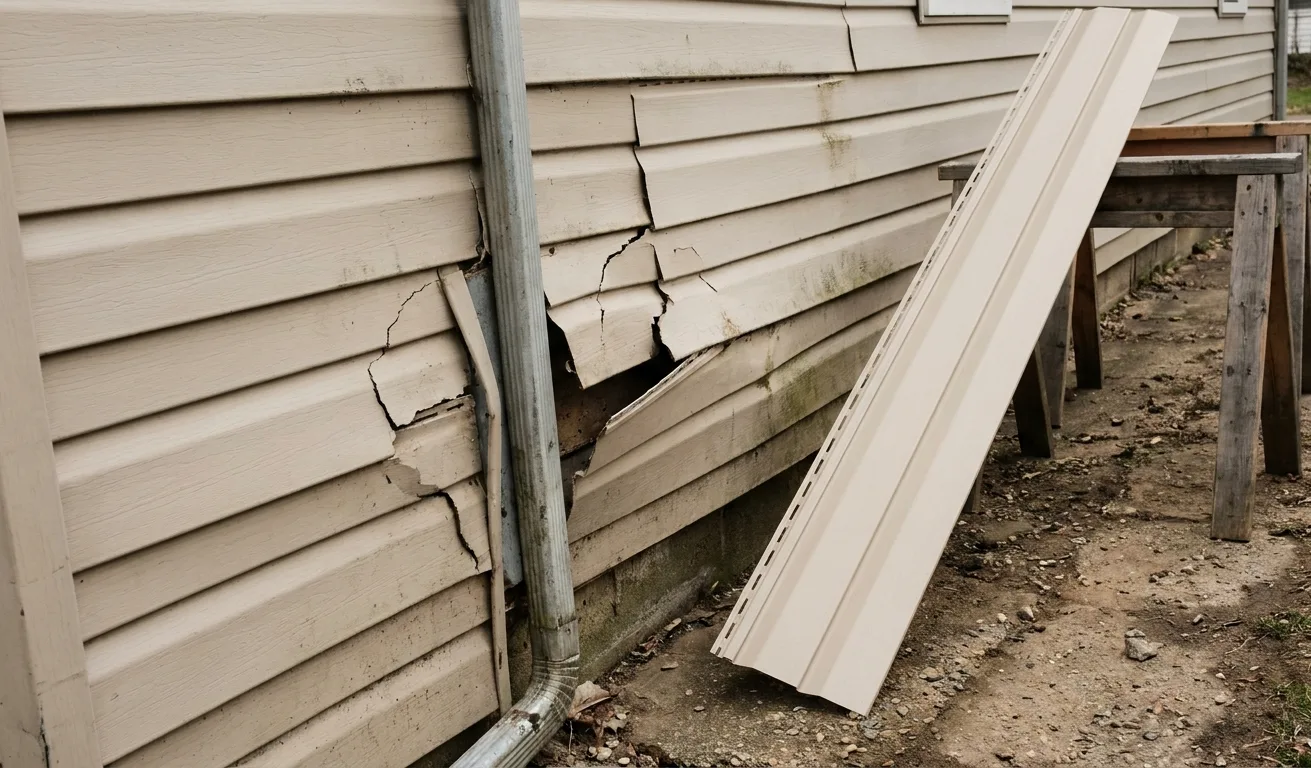
Visible Indicators on Exterior Walls
- Paint peeling in vertical strips along board grain
- Dark water lines beneath window sills after rain
- Boards pulling away at bottom edges near grade
- Soft spots detected by light thumb pressure on wood
- Gaps opening at vertical corner board joints
Common Causes in Older Construction
Freeze-thaw cycles push moisture behind clapboard when paint has lost elasticity. This lifts boards and allows water to reach the sheathing paper or felt. In row homes shared walls often hide the first signs until interior plaster shows staining.
Nails used on original siding rust and expand, creating small entry points. Over time the rust stains run down the face and the fastener loses grip. Technicians replace these with hot-dipped galvanized or stainless ring-shank nails set flush.
Inspection Points and Measurements
Our technicians check every course for uniform exposure and note any deviation greater than one-quarter inch. They probe end grain at butt joints with an awl and record locations where the tool sinks more than one-eighth inch. Corner boards receive special attention for plumb and for sealant condition at the roof transition.
Flashing integration at windows and doors is measured for proper slope and overlap. Where copper step flashing meets siding the crew verifies that each piece extends at least two inches behind the board above. Missing or displaced pieces are documented for inclusion in the repair scope.
Repair and Replacement Choices
Partial board replacement uses new cedar or pine selected for similar density and grain. The new piece is planed to match the original reveal and primed on all six sides before installation. Joints receive back-brushed caulk compatible with the existing paint system.
When entire elevations require attention Wynnewood Roof Repair offers fiber-cement boards milled to historic profiles. These accept paint readily and resist cupping while maintaining the shadow lines of the original wood. Color is matched to existing painted surfaces rather than left raw.
Steps Before the Crew Arrives
Homeowners can photograph every elevation from ground level and note the date and weather conditions when each image was taken. Clearing shrubbery away from the foundation by two feet allows clear sight lines for initial assessment without the need for immediate trimming.
Document any interior ceiling stains directly below exterior walls. These locations help the crew correlate exterior defects with interior damage before scaffolding is erected. Avoid attempting to seal gaps with tape or expanding foam, as these materials trap moisture and complicate later repairs.
Siding Repair questions
How do you match old siding profiles?
Technicians measure the exact reveal, thickness and edge bevel of existing boards. New stock is run through a thickness planer and the bottom edge is eased to replicate the original shadow line. Paint is applied in multiple thin coats to duplicate surface texture.
Can damaged siding be repaired without full replacement?
Yes. When only scattered boards show rot or cupping the crew removes and replaces individual pieces. The surrounding siding remains in place and new boards are feathered into existing paint lines so the repair blends with the rest of the elevation.
What happens at corners and roof intersections?
Corner boards are examined for plumb and for sealant failure. Where siding meets roof edges the crew checks step flashing height and overlap. Any missing copper or lead pieces are replaced before new siding courses are installed above them.
Will repairs affect interior plaster ceilings?
Repairs focus on the exterior only. When water has already reached sheathing the crew notes interior stain locations but does not open ceilings. Homeowners arrange separate plaster work if staining persists after exterior corrections are complete.
Schedule Siding Repair
Contact Wynnewood Roof Repair to arrange an inspection of siding conditions on your older home.