
Gutter Repair in the USA
Wynnewood Roof Repair sends technicians to assess gutter systems on older homes where copper or galvanized steel channels connect to slate or asphalt roofs. They measure existing pitch, hanger spacing, and joint condition to locate where water escapes before it reaches foundation or interior plaster.
Homeowners can first clear loose leaves and twigs from the troughs using a plastic scoop while standing on a stable ladder. Avoid forcing metal tools against seams or attempting to straighten bent brackets, since these steps can enlarge small openings or loosen fasteners already stressed by years of movement. Skylight seals in older construction fail over time so Wynnewood Roof Repair inspects gutter repair with precision.
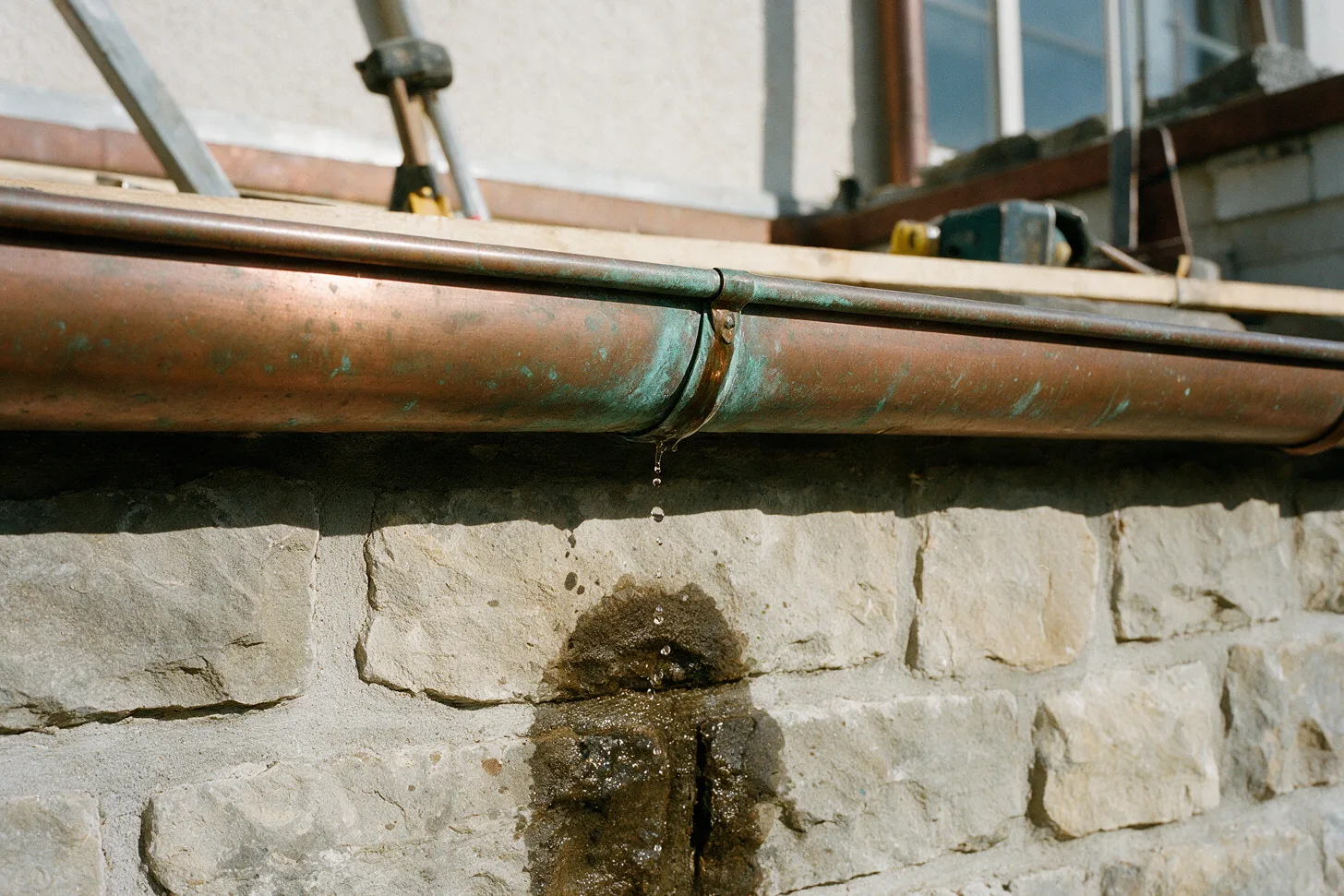
Visible indicators of gutter trouble
- Water streaks running down exterior siding below the eaves
- Pools forming at the base of downspouts after light rain
- Rust streaks or white oxidation along copper or steel seams
- Gutter sections visibly pulling away from the fascia board
- Sagging runs between hangers that hold standing water
Common causes on older homes
Decades of leaf accumulation and pollen compact into mats that hold moisture against the metal. Freeze-thaw cycles then force seams apart, especially where original soldered joints have thinned. Technicians note that fascia boards on twin homes often soften behind gutters, allowing brackets to tilt and destroy the required quarter-inch-per-foot slope.
Thermal expansion of long copper runs works against rigid downspout elbows. When the house settles unevenly, the gutter line drops at one end and water begins to back up under the roofing edge. Our technicians record these measurements before deciding whether targeted section replacement or new fastening will restore proper flow.
Inspection steps our technicians follow
Crews begin at the highest point and sight along the trough to confirm consistent fall toward each outlet. They test every hanger by applying gentle downward pressure and note any movement greater than one-eighth inch. Joints receive a close look for hairline cracks, missing solder, or deteriorated sealant that allows seepage during moderate rain.
Downspout connections are checked for crushed elbows and loose straps. Technicians also examine where the gutter meets the roofing plane to verify that step flashing and drip edge still direct water into the channel rather than behind the fascia. All findings are recorded so the homeowner receives a clear description of needed work.
Repair and replacement choices
Small seam separations in copper gutters are often corrected by cleaning the joint and applying new solder or copper-compatible sealant. When brackets have pulled free, longer lag screws or additional fascia anchors restore alignment without replacing the entire run. These localized fixes preserve original material on historic homes.
Where entire sections have rusted through or the slope cannot be recovered, Wynnewood Roof Repair installs matching aluminum or copper lengths. New runs receive hidden hangers spaced no more than twenty-four inches apart and are tied into existing downspouts with compatible elbows to maintain continuous drainage away from the foundation.
Materials and parts we use
Aluminum five-inch or six-inch K-style troughs provide economical replacement while copper half-round profiles match older slate roofs. Both materials receive stainless steel screws and butyl tape at overlaps to resist corrosion. Downspout straps are galvanized or copper to match the gutter metal and prevent dissimilar-metal staining on masonry walls.
Technicians carry replacement hanger brackets, pop rivets, and soldered elbows sized to the original system. When fascia boards show decay, small plywood backing plates are installed behind the brackets to distribute load without altering exterior trim profiles.
Gutter Repair questions
How do I know if my gutters need more than cleaning?
Standing water after rain stops, visible rust lines at seams, or water stains on siding indicate the troughs have lost pitch or developed openings. Wynnewood Roof Repair technicians measure these conditions directly rather than relying on surface debris alone.
Can damaged copper gutters be patched instead of replaced?
Isolated holes and seam splits in copper are routinely soldered or sealed when the surrounding metal remains sound. Full runs are replaced only when repeated freeze damage or widespread pitting makes continued patching impractical on older homes.
What happens if gutters are left sagging?
Continued sagging allows water to overflow behind the fascia, saturating sheathing and eventually reaching interior plaster ceilings. Early correction of hanger spacing and slope prevents these hidden moisture paths from forming.
Do you match existing gutter profiles on historic homes?
Wynnewood Roof Repair stocks half-round copper and K-style aluminum sections sized to original dimensions. Matching profiles and metal types maintain the appearance of the roof edge while restoring proper drainage.
Schedule Gutter Repair
Contact Wynnewood Roof Repair to have technicians measure and restore gutter slope on your older home.