
Roof Leak Repair in the USA
Wynnewood Roof Repair sends technicians to locate active roof leaks in older homes across the USA. They examine slate surfaces, copper step flashings and valley linings that commonly allow water past the roof plane into attic spaces and down to plaster ceilings below.
Leaks often start where original materials have shifted or where later patches have failed. Our technicians measure slope, note fastener patterns and check for ice dam residue before deciding on targeted repairs that preserve the remaining historic roof assembly. Inspecting copper valleys on slate roofs leads many to contact Wynnewood Roof Repair about roof leak repair across the USA.
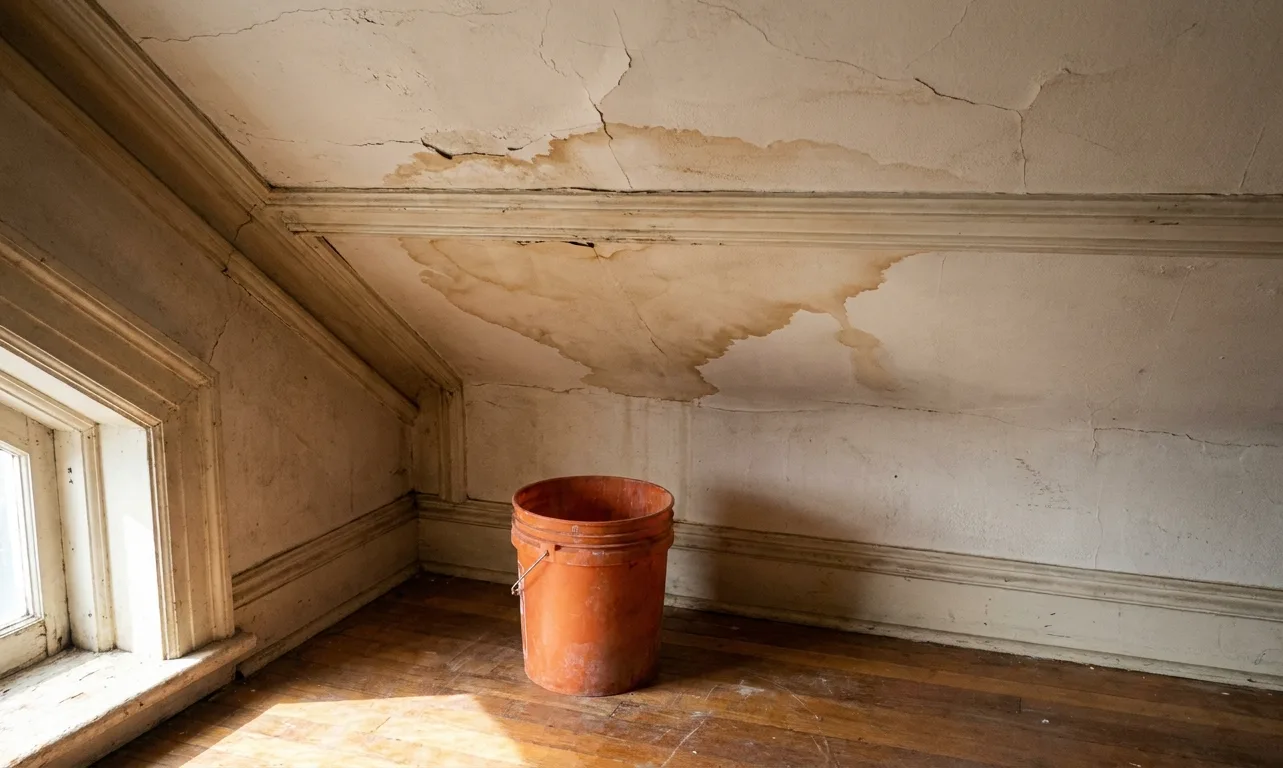
Early Indicators of Active Roof Leaks
- Dark water rings forming on plaster ceilings in top floor rooms.
- Damp spots appearing along interior walls after heavy rainfall.
- Granule loss visible in gutters near valley intersections.
- Slate tiles shifting or sliding out of their original rows.
- Musty odor rising from attic insulation near chimney bases.
Common Entry Points on Older Roofs
On homes built before modern underlayment, water travels along the back side of slate until it finds a gap at a nail head or broken corner. Technicians look first at the intersection of two roof planes where copper valleys have thinned from decades of thermal movement.
Chimney cricket flashings and sidewall step flashings are examined next. Copper that has lost its patina or has been covered with incompatible sealant often allows water to migrate behind the masonry and drip onto ceiling joists several feet away from the visible stain.
What Technicians Measure and Record
Our technicians record roof pitch, count rows of slate from eave to ridge and note the condition of every visible copper component. They measure the distance between water stains on ceilings and the nearest roof penetration to determine the likely travel path of the leak.
They also check attic ventilation and insulation depth because trapped moisture can travel laterally along roof sheathing before dripping. All findings are photographed and mapped so the repair addresses the actual entry point rather than only the interior symptom.
Repair Approaches That Respect Original Materials
Where individual slates have cracked, technicians slide in new matching slate with copper hooks rather than replacing an entire row. Small valley sections showing pinholes can be overlaid with new copper that is soldered to the remaining sound metal to maintain the original appearance.
When flashing at a dormer or skylight has failed, the assembly is rebuilt using like materials so the roof continues to age evenly. Temporary interior measures such as plastic sheeting under the stain are avoided because they trap moisture against plaster and lath.
What Homeowners Should Do While Waiting
Place a bucket or shallow pan directly under any active drip and move furniture away from the stained ceiling area. Note the date and time of each new stain so the pattern can be compared with recent weather events before our technicians arrive.
Avoid walking on the roof or applying caulk to visible gaps because these actions can drive water deeper into the assembly. Keep attic access clear so the leak path can be traced from inside without delay once the crew reaches the property.
Roof Leak Repair questions
How do you find the exact source of a leak?
Technicians start inside the attic, marking water trails back to the roof plane, then inspect the corresponding exterior area for failed slate, displaced flashing or clogged valleys. Measurements and photographs confirm the entry point before any material is disturbed.
Can you repair just the leaking section?
Yes. Small areas of deteriorated copper or individual damaged slates are replaced with matching materials while the rest of the roof remains untouched. This approach keeps the original weathering patterns intact across the remaining surface.
Will interior plaster need repair after the roof is fixed?
Once the roof leak is stopped, plaster can dry naturally. Our technicians advise against immediate ceiling work because residual moisture must leave the lath first to prevent new mold growth behind the finished surface.
What materials are used for flashing repairs?
New sections are formed from copper of the same weight as the original. Joints are soldered rather than sealed so the repair ages at the same rate as the surrounding historic work and does not require repeated maintenance visits.
Schedule Roof Leak Repair
Contact Wynnewood Roof Repair to inspect the source of water entry and protect plaster ceilings in older homes across the USA.