
Roof Replacement in the USA
Roof Replacement addresses cases where existing coverings have reached the end of service life or sustained widespread damage. Wynnewood Roof Repair technicians first strip layers to the deck, then evaluate sheathing for rot or deflection before installing new underlayment and coverings suited to the structure.
In older row and twin homes, replacement often involves matching original slate or metal profiles while adding modern ventilation. Our technicians route new flashing around chimneys and valleys to prevent water entry that could stain plaster ceilings on upper floors. Full replacement of deteriorated roofing layers follows detailed checks by Wynnewood Roof Repair for roof replacement in the USA.
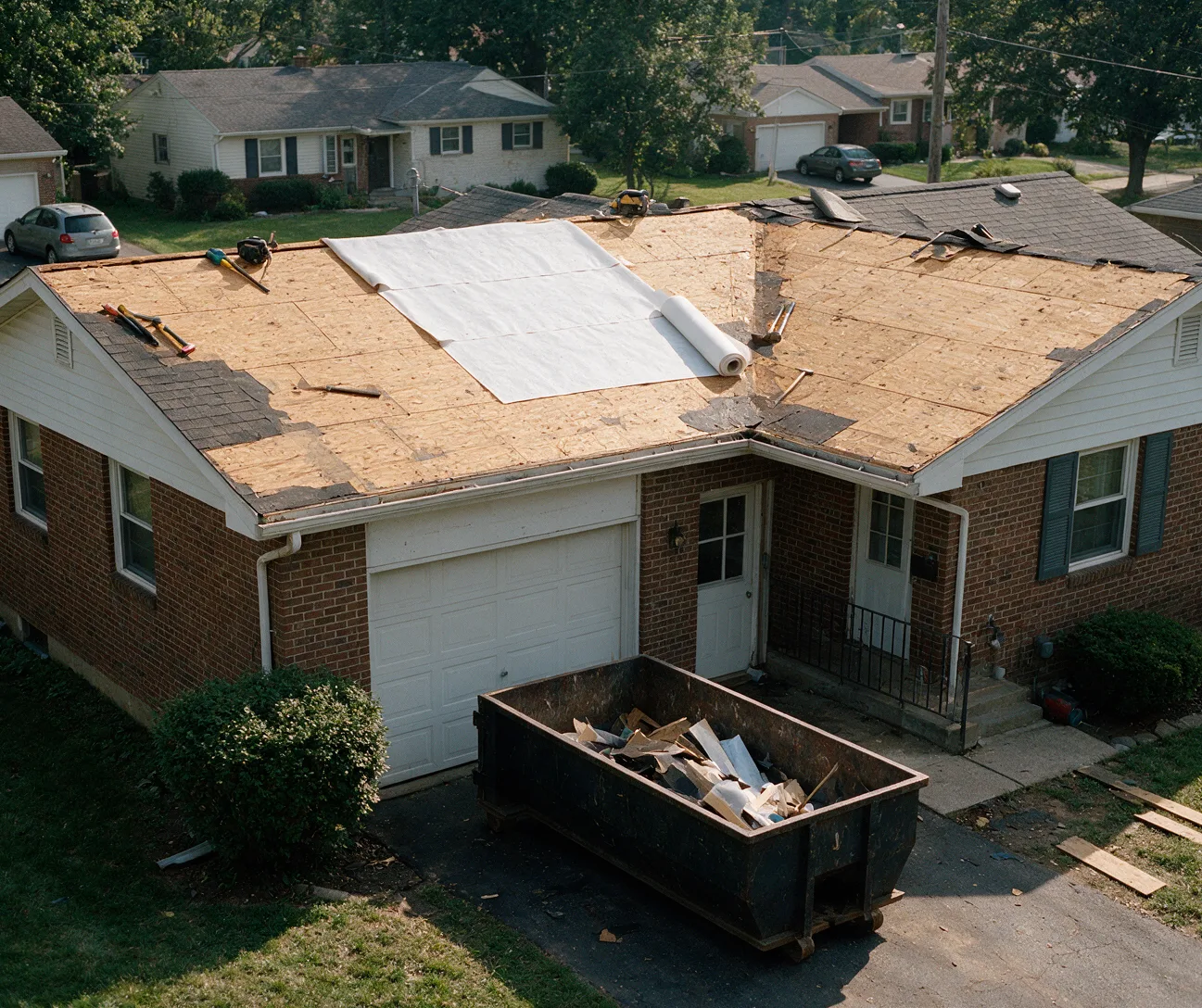
Indicators That Replacement Is Required
- Multiple layers of covering exceed deck load limits
- Widespread granule loss exposing mat on asphalt surfaces
- Slate tiles cracking or sliding from nail fatigue
- Interior plaster stains recurring after each storm
- Daylight visible through deck gaps in attic space
Common Causes Requiring Full Replacement
Thermal cycling loosens fasteners on slate and shakes, allowing ice dams to push water under remaining courses. In older homes this leads to repeated saturation of sheathing and eventual collapse of support members.
Copper valleys and step flashing corrode at seams after decades, channeling water along rafters into wall cavities. Replacement removes these failed components entirely rather than patching isolated sections that leave surrounding material vulnerable.
Inspections and Measurements Performed
Technicians walk the deck to record sag between rafters and probe for soft spots with an awl. They measure rafter spacing and note collar ties or missing cross bracing that affect load distribution during new installation.
Attic checks include moisture meter readings at deck underside and examination of insulation compression near eaves. These readings guide ventilation upgrades that reduce future condensation on the new covering.
Materials and Installation Choices
For historic profiles, Wynnewood Roof Repair sources fiber cement slate or reclaimed metal panels that replicate original appearance without adding excessive weight. Underlayment selections include high-temperature rubberized asphalt in valleys and eaves.
New copper or lead-coated copper is formed on site for custom flashings around dormers and chimneys. Each piece is cleated rather than face-nailed to accommodate expansion while maintaining watertight overlaps.
Steps Homeowners Take Before Arrival
Document visible interior stains with dated photographs and note which rooms are affected. Clear attic access by moving stored items away from the hatch so measurements of deck condition can proceed without delay.
Locate and mark any known shutoffs for plumbing vents or electrical lines that penetrate the roof plane. This allows technicians to protect those penetrations during tear-off and reinstallation.
Roof Replacement questions
How does Wynnewood Roof Repair protect plaster ceilings during replacement?
Technicians place padded tarps and temporary supports under vulnerable ceiling areas before work begins. They also stage debris chutes to prevent vibration from dislodging ceiling keys on upper floors.
What ventilation upgrades are added during replacement?
Ridge vents and intake baffles are installed to match the new covering profile while maintaining airflow above insulation. This reduces moisture buildup that previously caused deck cupping in older homes.
Can original copper details be reused or matched?
Sound sections of existing copper are removed, cleaned, and reinstalled where possible. New pieces are fabricated to continue the same seam and cleat details so the appearance remains consistent.
How are multiple existing layers handled?
All layers are removed down to the deck unless weight calculations confirm an additional layer is acceptable. Complete removal allows direct inspection and correction of underlying structural issues.
Schedule Roof Replacement
Contact Wynnewood Roof Repair to assess whether replacement is the appropriate next step for your home.